ACMA Sanctions 2 Online Bookies for Self-Exclusion Failures

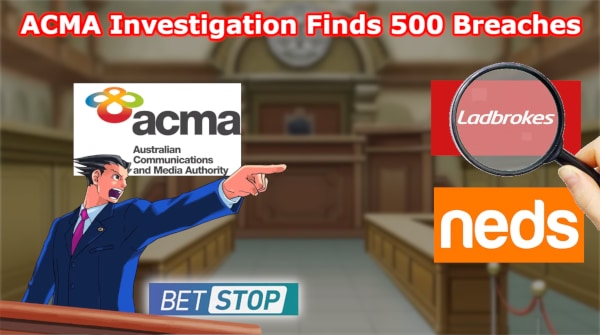
The Australian Media and Communications Authority (ACMA) has been making a name for itself lately by cracking down on offshore gaming sites. However, it also has authority over the country's domestic gambling market, and it has recently demonstrated these powers by conducting an investigation into Ladbrokes and Neds. The ACMA found that these firms repeatedly broke the rules regarding self-exclusion.
What Did Ladbrokes and Neds Do?

Ladbrokes AU and Neds AU are a couple of online sportsbooks that are both owned by Entain. They're licensed by the Northern Territory Racing and Wagering Commission as sports bookmakers. The ACMA found that there were more than 500 infractions between these two brands related to self-exclusion failures.
 The Ladbrokes AU Website
BetStop
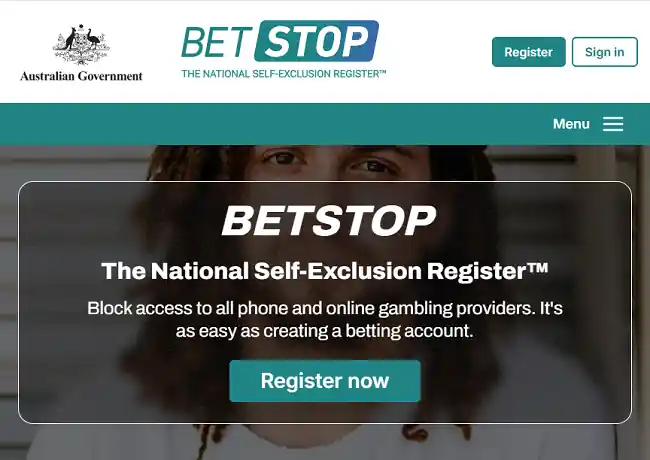
BetStop is the National Self-Exclusion Register for Australia. According to BetStop's website, once anyone registers for BetStop, online gambling firms will no longer allow that person to place bets, open new betting accounts, or receive marketing messages from betting services. According to Australian law, the Register operator must respond within one second to requests from interactive wagering service providers to check the registration status of any individual. In practice, responses to such requests are often completed well within one-hundredth of a second.
 BetStop Is the Australian National Self-Exclusion Register
Part 7B of the Interactive Gambling Act 2001 mandates certain rules that licensed betting operators must comply with regarding self-exclusion, and it is these regulations that Ladbrokes and Neds failed to adhere to.
According to the ACMA's investigation, which began in December 2024, these companies allowed several persons who had registered for BetStop to open accounts, extended betting services to those on the self-exclusion list, failed to close accounts belonging to those on the BetStop register, and did not promote the National Self-Exclusion Register as required by law.
Entain Attempts to Defend Itself

While acknowledging its failures to fully respect the self-exclusion of its users, Entain did attempt to mount a defence to the ACMA's accusations. According to the Interactive Gambling Act, “taking reasonable precautions and exercising due diligence” is a legitimate defence to the infractions that Entain committed.
Entain then went on to outline the steps it had taken to exercise due diligence, including checking customers' status with BetStop upon login and when they attempted to place bets, implementing an ISO-approved risk management framework, and the training of personnel. The ACMA agreed with Entain's general assertions that compliance with the IGA's self-exclusion mandates was a moving target and not simply a binary yes/no question. However, the ACMA felt that Entain's efforts were insufficient.
In particular, there were a lot of weaknesses in Entain's attempts to prevent self-excluded individuals from signing up again with different personal details. The ACMA concluded that simply checking each user's submitted information against the details contained in the BetStop database was not a sufficient exercise of due diligence on the part of Entain.
As an example of what Entain could have done better, the ACMA stated that the company could have conducted ID verification on customers to make sure the info they submitted was valid before checking up on that info with BetStop. Moreover, the details supplied with requests to open accounts that wound up being flagged by BetStop could have been retained by Entain to try to prevent those same users from reapplying for accounts with slightly different personal details. There were indeed several instances of account registrations being rejected by Entain followed by successful account registrations made from the same machines several seconds later with minor changes in the personal information entered.
Entain Commits to 18-Month “Undertaking”

Rather than issuing fines or other penalties, the ACMA accepted Entain's “Enforceable Undertaking,” which will unfold over the course of 18 months. It can be terminated earlier by Entain with the consent of the ACMA. This agreement is enforceable by the courts, so if Entain fails to follow through, it could be subject to financial penalties.
Outside Consultant Solicited
As part of the undertaking, Entain will secure the services of an independent consultant. The consultant will have to be approved by the ACMA, or Entain will have to find another one and repeat this process until the consultant is approved.
This consultant will look over Entain's “systems, processes, and practices” to identify those that are inadequate for the purposes of blocking access to users who have registered with BetStop. The consultant will produce a report recommending various improvements to help Entain better discharge its BetStop obligations. This report will be presented both to the Board of Entain and to the ACMA.
Planning and Reporting
Entain will then come up with an Implementation Plan and give a copy to the ACMA. After six months, Entain will evaluate its compliance with the plan and any timeframes included. Entain will provide a written report on such to the ACMA.
As part of Entain's ongoing commitments, it will self-report any instances of “non-compliances with the BetStop Obligations” within a month of the firm becoming aware of such non-compliances. This includes reporting on the details of any complaint received by Entain.
Licensed Operators no Better Than Unlicensed?

The ACMA and other regulatory bodies often point to the harms caused by offshore gaming providers especially to at-risk populations and problem gamblers. Their contention is that licensed gaming encompasses tools to address problem gaming, like self-exclusion registries, that are simply lacking in their unlicensed peers.
However, this latest incident demonstrates that even duly licensed and regulated corporations often have trouble fully discharging their obligations regarding gambling addiction. Savvy problem gamblers often find ways around mechanisms intended to block them whether or not they're dealing with Australia-licensed or offshore providers.
Meanwhile, for the vast majority of Australians who responsibly manage their gaming activities, the strict regulatory regime in the country restricts their freedom of choice and makes it harder for them to engage in their pastime. One of the ways that it limits consumer choice is by only allowing certain forms of online gaming, like sports betting, and disallowing others, like casino games and poker. Casino and poker enthusiasts must, of necessity, head offshore if they wish to play over the internet simply because there are no businesses licensed to offer these games anywhere in Australia.
You Can Still Play Online

It's a saving grace of government that its strident march toward its goals is often stymied by lack of foresight and general incompetence. In the case of the ACMA, many of the websites that it “blocks” can still be accessed by adjusting DNS settings or by connecting through an alternate domain name. Thus, quite a few of the targeted sites are still able to accept Australian customers.
Ignition Casino Poker is a fine example of this. It began accepting Australians in July 2017, and it has continued to do so till the present day despite being one of the firms most frequently cited by the ACMA as being “illegal.” When you register a new Ignition account, you can claim a poker welcome bonus of 150% up to $1,500, and you can get a similarly sized bonus for casino gaming too. Press the button below to join:
To learn more about Ignition first, you can head over to this accurate review. For other Aussie-friendly internet poker rooms, check out this Australia online poker guide.
May 13, 2026 – by Max Golden, Editor-in-Chief